
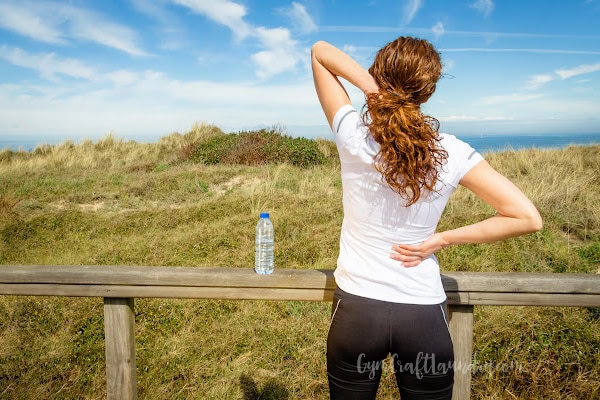
I don’t claim to be a fitness guru. I’m a mom who likes lifting weights because it helps me feel strong, sane, and a little more like myself.
But life has a way of interrupting even the best workout routine. Sick kids, busy schedules, travel, school events, houseguests, and general mom chaos can all turn a regular gym habit into “I’ll go next week.”
Sickness, kid schedules, and random mom-life chaos can all derail a routine, so I also wrote about when to start working out after a cold.
And then next week finally comes.
The workout feels good while you’re doing it. You feel proud. You feel back on track. You may even think, “That wasn’t so bad.”
Then the next day hits.
Post-workout muscle soreness after a break is no joke. It can make stairs feel personal, laundry baskets feel heavier than dumbbells, and getting up from the couch feel like a full-body event.
The good news is that some soreness after returning to exercise is common. The better news is that you can make your return easier on your body.
Quick Answer: What helps post-workout soreness after a break?
Post-workout soreness after a break usually improves with time, gentle movement, hydration, enough protein, and a gradual return to your workouts. The biggest mistake is jumping back in at your old intensity too soon. Start lighter than you think you need to, give your body recovery time, and pay attention to pain that feels sharp, severe, or unusual.

Why you feel so sore after taking time off
When you take a break from working out, your body gets a little less used to the movements, weights, and intensity you were doing before. Then when you jump back in, your muscles are suddenly asked to work harder than they have in a while.
That soreness is often called delayed-onset muscle soreness, or DOMS. It usually shows up after exercise that is harder, newer, or more intense than your body is used to.
For me, legs are always the worst. I can take time off and convince myself I’m still strong enough to squat like I did before. My legs quickly remind me that confidence and conditioning are not the same thing.
1. Start lighter than your ego wants you to
This is the least exciting advice and probably the most useful.
After a workout break, I always have to remind myself that I am not starting over, but I am restarting. There is a difference.
Restarting means your body remembers the routine, but it still needs time to readjust. You may not need beginner-level workouts, but you probably do need lower weights, fewer reps, fewer sets, or less intensity than you were doing before the break.
If you normally lift heavy, try starting with lighter weights for the first week. If you normally run, try walk-run intervals or a shorter distance. If you normally do intense classes, give yourself permission to modify.
This is not weakness. This is how you make it easier to stay consistent without being too sore to function the next day.
2. Do not train your most painful muscle group first
I love squats. If I could only choose one exercise, I would probably choose squats.
Unfortunately, my legs are also the muscle group most likely to punish me after a break.
One thing that has helped me is easing back into the gym with cardio, upper body, core work, or lighter full-body movement before jumping straight into a heavy leg day. That does not mean skipping legs forever. It just means I do not make my most soreness-prone muscle group the first big workout after time off.
This is especially helpful if you are a busy mom and cannot afford to be hobbling around the house for three days because you tried to prove something to yourself on day one.
3. Keep moving gently
When you are really sore, the couch is tempting. I understand this deeply.
But gentle movement often feels better than staying completely still. A walk, easy cycling, light stretching, or simple mobility work can help your body loosen up without adding more stress.
The key word is gentle.
4. Prioritize protein and easy recovery food
I used to think about workout recovery mostly in terms of supplements. Now I think more about whether I’m giving my body enough basic support.
Protein matters because your body uses it to repair and maintain muscle. That does not mean you need to obsess over every gram, but it does mean recovery is harder if you are working out and then running on coffee, leftover kid snacks, and random bites of whatever is in the fridge.
Some easy recovery options include:
- Greek yogurt with fruit
- A smoothie with protein
- Eggs and toast
- Cottage cheese and berries
- Chicken, rice, and vegetables
- A protein snack after a workout
- A simple recovery drink or smoothie when you do not feel like eating much
I still like convenient options because mom life does not always line up with a perfect meal plan. But I would rather build the post around real recovery habits than make any one supplement sound like the magic fix.
5. Hydrate like it actually matters
Hydration will not magically erase soreness, but being under-hydrated does not help anything feel better.
If I am getting back into workouts, I try to be more intentional about water before and after exercise. If I sweat a lot, I also pay attention to electrolytes, especially in the summer.
This does not need to be complicated. Drink water. Eat regular meals. Do not expect your body to recover well when you are running on fumes.
6. Be careful with supplement claims
The original version of this post talked more about tart cherry juice, protein powder, and amino acids. I still think it is fine to mention recovery drinks or supplements if they are part of your routine, but I would not make any one product sound like the magic answer for soreness.
Some people like using tart cherry juice, protein powder, amino acids, or electrolyte drinks as part of their recovery habits. I see those as optional tools, not requirements.
The basics still matter most: easing back into exercise, eating enough protein, drinking water, sleeping when you can, and giving your body time to adjust.
7. Know when soreness is not normal
Normal soreness can be uncomfortable, but it should gradually improve.
Pain that is sharp, severe, one-sided, worsening, or connected to swelling, weakness, dark urine, fever, or feeling very unwell is different. That is when it is time to stop guessing and contact a healthcare provider.
You should also be careful if soreness is happening after almost every workout. That may be a sign that your workouts are too intense, your recovery is not enough, or something else needs attention.
The best soreness tip: make the next workout easier to show up for
The goal is not to avoid every bit of soreness forever. The goal is to get back into a routine without making yourself miserable.
When I take time off, I remind myself that one workout does not need to make up for all the missed workouts. It just needs to help me restart.
Start lighter. Move gently. Eat something that supports recovery. Drink water. Sleep when you can. Give your body a few days to remember what you are asking it to do.
And maybe don’t make heavy squats your first workout back unless you enjoy negotiating with staircases.
Recovery looks different depending on the workout, your schedule, and how long it has been since you exercised regularly. These are some of the common questions that come up when you are sore after getting back into a routine.
FAQs About Post-Workout Muscle Soreness
Why am I so sore after working out again?
You may feel extra sore after working out again because your muscles are being challenged in a way they have not been used to lately. Even if you were active before, taking time off can make your body less conditioned for certain movements, weights, or workout intensity.
This is especially common after strength training, squats, lunges, running, or any exercise that feels new or more intense than what you have been doing recently.
The best thing you can do is ease back in instead of trying to make up for lost time in one workout.
Should I work out if I’m still sore?
It depends on the type of soreness. If your muscles feel mildly sore or stiff, gentle movement like walking, stretching, or an easy workout may help you loosen up.
But if you are very sore, limping, moving differently, or feeling sharp pain, give that muscle group more time to recover. You can still move your body, but choose something lighter or train a different area.
Soreness is not a requirement for progress. Sometimes the smarter workout is the one that helps you come back again tomorrow.
How long does post-workout soreness last?
Post-workout soreness often shows up the day after exercise and may feel strongest within the next couple of days. For most people, it gradually improves with time, gentle movement, hydration, food, and rest.
If the soreness is not improving, feels severe, or keeps happening after almost every workout, that is a sign to slow down and pay attention to what your body is telling you.
Does protein help with muscle soreness?
Protein helps support muscle repair and recovery after exercise, but it is not a magic cure for soreness. Think of protein as one part of your recovery routine, along with hydration, sleep, gentle movement, and easing back into workouts gradually.
After a workout, I like easy protein options because I am usually hungry, tired, or running into the next thing on my schedule. Smoothies, Greek yogurt, eggs, cottage cheese, chicken, or a simple protein snack can all be helpful options.
When should I worry about muscle soreness?
Normal muscle soreness can be uncomfortable, but it should gradually get better. You should be more cautious if the pain is sharp, severe, one-sided, getting worse, or making it hard to move normally.
You should also contact a healthcare provider if soreness comes with swelling, weakness, dark urine, fever, or feeling very unwell.
A little soreness after getting back into workouts can be normal. Pain that feels extreme or unusual is different, and it is worth taking seriously.
The goal is not perfection. The goal is giving your body something useful to work with while it recovers.



Great tips! I am always sore after I workout because I RARELY do, LOL!
Echo recently posted…Lock It Up with Lokables!